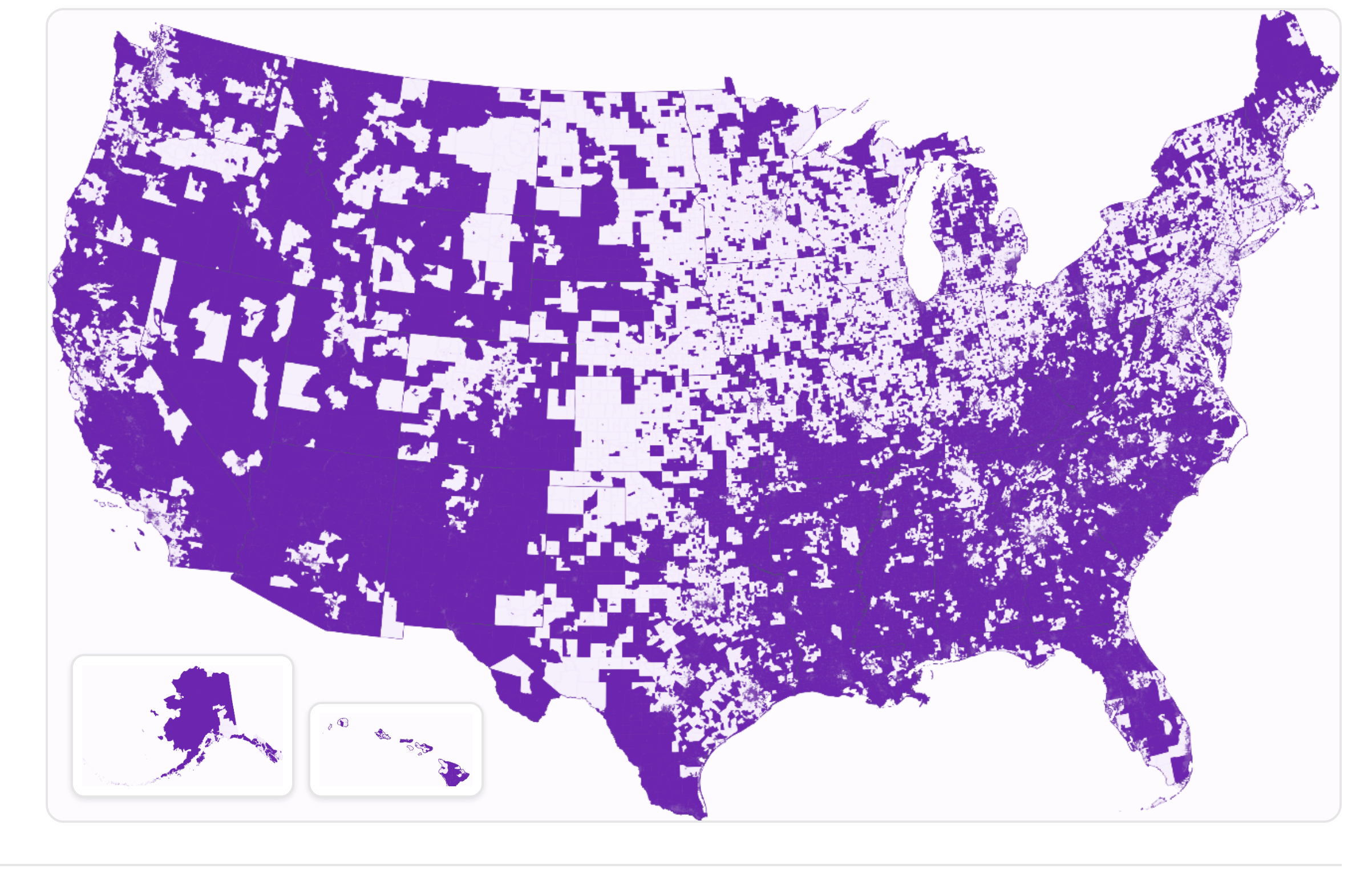
As of December 31, 2025, 2,409 credit unions held a low-income designation (LID), according to NCUA Call Report data. Low-income credit unions (LICUs) held about $136 billion in outstanding business loans. Credit unions without the designation held about $61 billion. One regulatory difference bears directly on that gap: a LICU is exempt from the member business lending cap that limits every other federally insured credit union.
The low-income designation is a commercial lending tool as well as a community development status. It removes the member business loan (MBL) cap, adds nonmember deposits as a funding source, and permits subordinated debt that counts toward net worth. Credit union CEOs and chief lending officers (CLOs) who treat the designation only as a community development status have not yet priced in those three tools.
How the member business lending cap limits commercial lending
Federal law limits a credit union's aggregate net member business loans to the lesser of 1.75 times its net worth or 1.75 times the minimum net worth required to be well capitalized (12 CFR 723.8(a); 12 U.S.C. 1757a). With a 7% well-capitalized minimum, the second figure works out to 12.25% of total assets. A credit union that builds commercial relationships can reach that limit. At the limit, it can sell participations, decline new loans, or refer borrowers to a bank.
The cap does not bind every credit union. As CUCollaborate noted in an April 2026 analysis of exemption pathways, only a small fraction of credit unions sit close enough to the ceiling for it to matter. For credit unions with active commercial pipelines, the ceiling is a real constraint.
Complex credit unions, those with more than $500 million in assets, can opt into the Complex Credit Union Leverage Ratio (CCULR) framework if they meet its criteria. The criteria include a net worth ratio of at least 9%, off-balance sheet exposures of 25% or less of assets, trading assets and liabilities of 5% or less, and goodwill and other intangibles of 2% or less. A credit union in the framework uses 9% as its well-capitalized minimum. Its asset-based limit is 1.75 times 9% of total assets, or 15.75% (NCUA risk-based capital FAQ, accessed October 2026). The LICU exemption removes the aggregate limit under either framework.
What the LICU exemption removes
Under 12 CFR 723.8(d), a federally insured credit union with a low-income designation is exempt from the aggregate MBL limit. The same section exempts credit unions that participate in the CDFI program, that were chartered to make member business loans, or that primarily made commercial loans when the Credit Union Membership Access Act was enacted in 1998. The April 2026 post compares each path.
The exemption applies to the aggregate limit. The rest of Part 723, board policy, and examiner review of commercial lending still apply. Within those rules, a LICU can grow commercial real estate, equipment financing, and operating lines of credit without tracking a cap.
What the designation means for brand and membership
The designation is a regulatory classification that NCUA assigns using member data from examinations. 12 CFR 701.34 sets out how NCUA identifies and designates low-income credit unions. It contains no requirement to use the term "low-income" in marketing or member communications.
NCUA designates a credit union as low-income when more than 50% of its members have family income at or below 80% of the median family income for their metropolitan area or the national metropolitan area, whichever is greater (12 CFR 701.34(a)(2)). The test is relative. It measures member income against the surrounding area, not against a poverty line. Our July 2026 analysis of NCUA data found that 62% of Americans live in LID-qualifying areas.
Business lending at LICUs and non-LICUs
As of December 31, 2025, LICUs held 247,208 outstanding business loans. Credit unions without the designation held 106,809. By balance, LICUs held about $136 billion and non-LICUs about $61 billion (NCUA Call Report data, Q4 2025).
These are group totals, so they reflect the number of institutions in each group as well as lending activity.
Nonmember deposits and subordinated debt
A LICU can accept nonmember shares. Public unit and nonmember shares together are limited to the greater of $3 million or 50% of the credit union's net paid-in and unimpaired capital and surplus, after subtracting existing public unit and nonmember shares (12 CFR 701.32(b); 12 U.S.C. 1757(6)). As of December 31, 2025, LICUs held $19.4 billion in nonmember deposits (NCUA Call Report data). Those deposits give a lending team a funding source beyond member shares. Reciprocal deposits are one related option.
A LICU can also issue subordinated debt and count it toward net worth (12 CFR 702.2; 12 CFR 702.403). Secondary capital issued before 2022 is grandfathered under 12 CFR 702.414. Complex credit unions and some new credit unions can also issue subordinated debt, so the tool is not limited to LICUs. As of December 31, 2025, LICUs had $4.3 billion in subordinated debt outstanding (NCUA Call Report data). Net worth ratios fall when assets grow faster than capital, so subordinated debt matters when a commercial portfolio expands quickly. Our analysis of secondary capital for LID credit unions covers how it works and what NCUA expects in an application.
Next step for credit unions
A credit union can start by checking whether it already qualifies. NCUA's LID workbook compares membership data with census tract income data. CUCollaborate reported 30 designations achieved for clients since 2020 and 46 active LID clients in 2024 (April 2026 post).
To see whether a credit union qualifies and what the exemption would mean for its commercial lending plans, schedule a consultation with CUCollaborate's Low-Income Designation team. There is no obligation to pursue anything.