


More than half of all credit unions are in decline. Membership is flat or falling, and the gap between growing and shrinking institutions is widening every year.
Field of membership is one of the few levers a credit union fully controls. It decides who is eligible to join. So a fair question is whether expanding that eligibility actually changes performance, or whether it just adds names to a map.
We looked at ten years of data to answer it. The pattern is consistent: credit unions that expanded their field of membership performed better than those that did not, and on most measures, the larger the expansion, the better the result.
What the data shows
We grouped credit unions by how much they expanded their field of membership over the period, then compared performance across four measures. The table below shows the annual averages for each group.
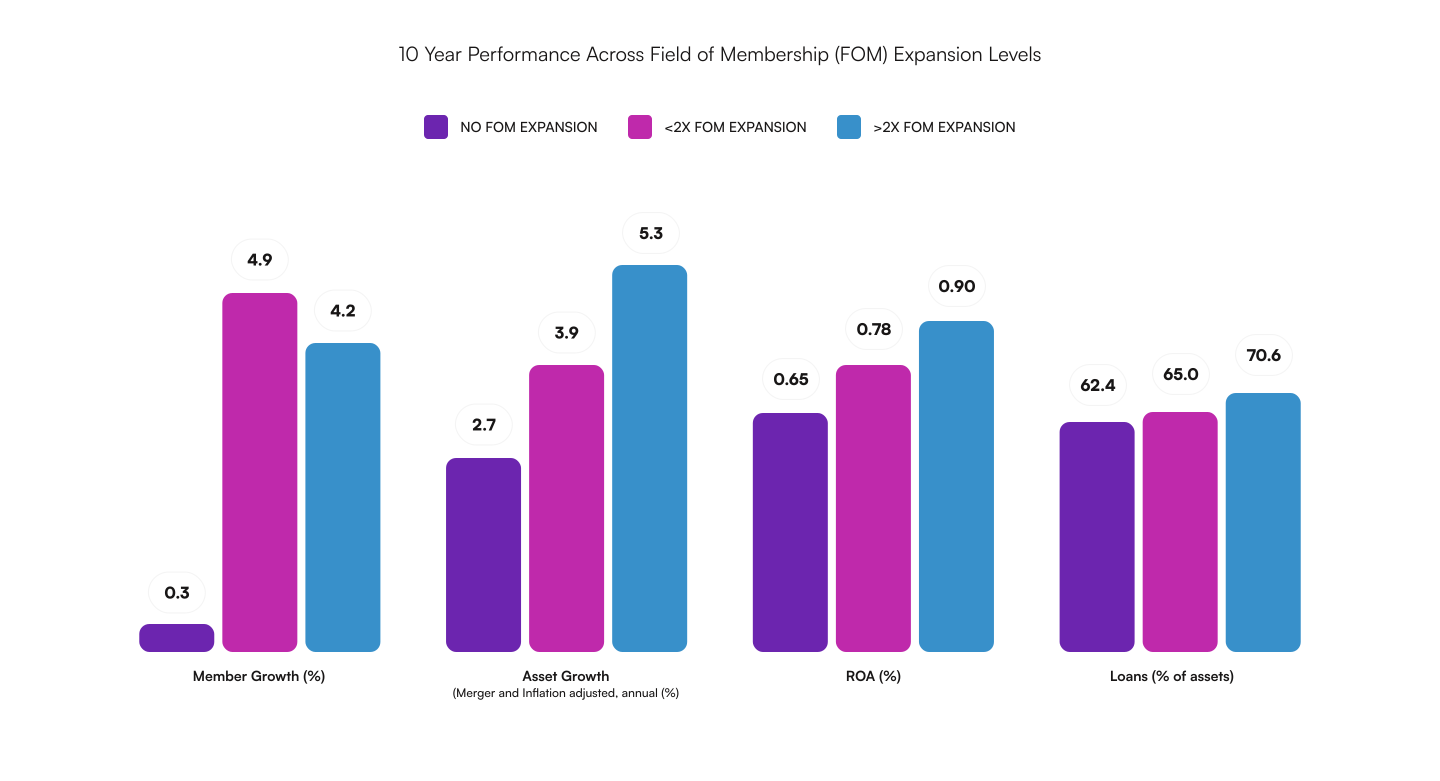
The first row is the clearest. Credit unions that did not expand grew membership by 0.3% a year, which is effectively flat. Credit unions that expanded grew membership more than ten times faster. Eligibility was the difference.
The financial measures tell a second story. Asset growth, return on assets, and the loan-to-asset ratio all rise with the size of the expansion. Credit unions that more than doubled their field of membership posted the highest asset growth, the highest ROA, and the highest share of assets in loans of any group.
One measure does not follow that pattern. Member growth is slightly higher for the up-to-2x group than for the more-than-2x group, 4.9% against 4.2%. Both are far above the no-expansion group, so the takeaway is not that bigger expansions slow membership. A reasonable read is that the largest expansions open more market than a credit union can convert in the same window, while the financial benefits show up across the full period. The expansion creates the opportunity. Capturing it takes time and execution.
Larger and more diverse expansions project further ahead
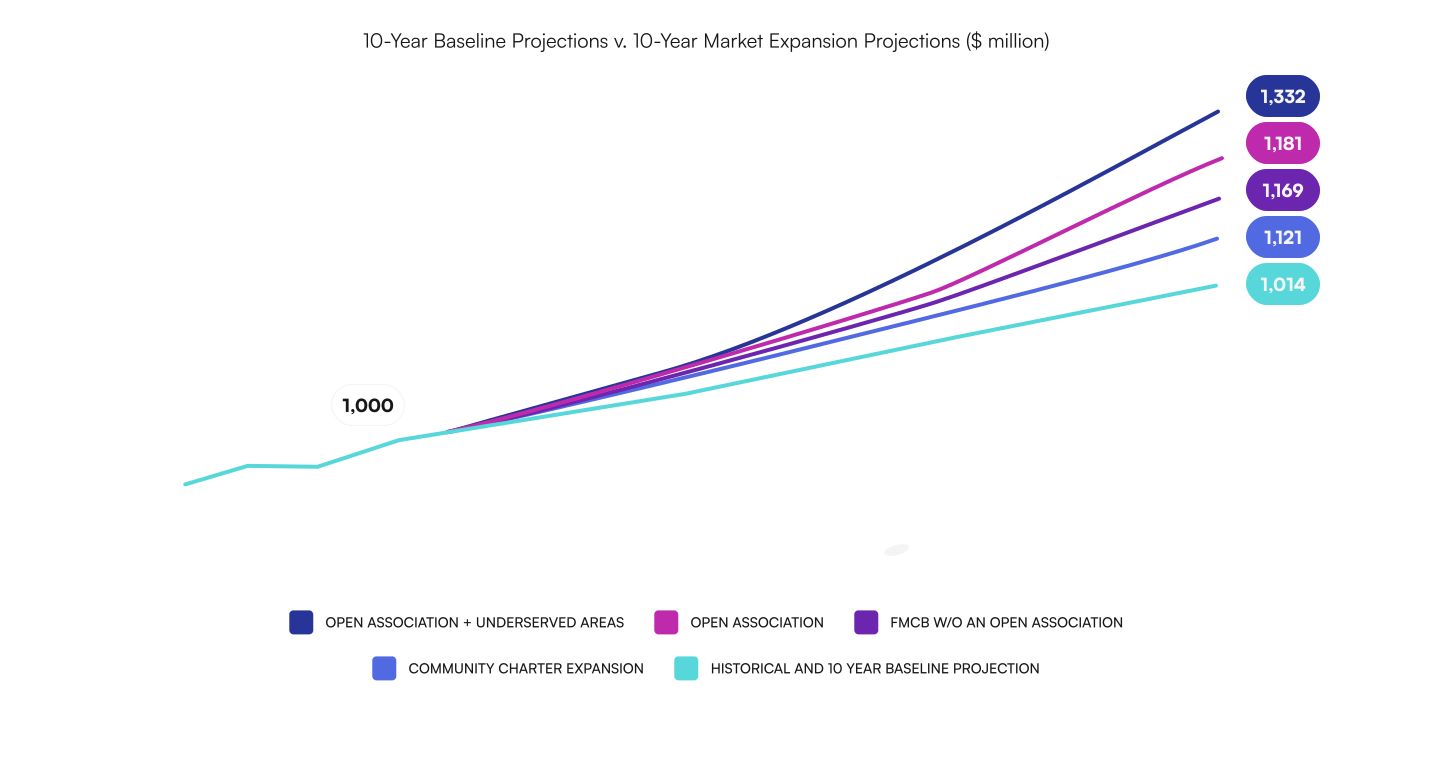
Size is one factor. Type is another. We also modeled 10-year asset projections for different expansion paths against a baseline of no change.
The paths we compared were a multiple common bond charter with both open associations and underserved areas, a multiple common bond charter with open associations only, a multiple common bond charter without an open association, and a community charter expansion.
The projections separate clearly. The most diverse path, a multiple common bond charter that adds both open associations and underserved areas, projects the largest asset base over ten years. Each step down in diversity projects a smaller one, and all of them project above the baseline of staying put.
The reason is straightforward. A more diverse field of membership reaches more people, in more ways, with fewer single points of failure. A credit union that can serve members through an open association, an underserved area, and an employer group is not dependent on any one of them.
What this does and does not prove
This is historical data, not a guarantee. It shows a strong and consistent relationship between expansion and performance across a large set of credit unions over ten years. It does not promise that any single expansion will produce these averages, and asset growth here is adjusted for both mergers and inflation so the figures reflect organic results rather than acquired ones.
What the data does establish is direction. Credit unions that expanded grew. Credit unions that expanded the most performed the best on financial strength. Credit unions that stayed put mostly stood still.
Where to start
The hard part is not deciding to expand. It is finding the expansion that is both compliant and worth pursuing, then getting it approved. That is the work: identifying the field of membership options available to your charter, modeling which ones reach the most growth, and building an application the NCUA will approve.
If you are weighing whether an expansion is worth it, the data above is a reasonable place to begin. The next step is seeing which options your credit union actually qualifies for.
Learn more about field of membership expansion and chartering or schedule a consultation to see your options.


.avif)